
LOCI’s current researches :
CaSt – Care and State network
CaSt denotes a network of anthropologists interested in the relational co-constitution of care and the state. Starting from a small team in Vienna, we have expanded to a decentralised network of independent scholars convinced that bringing these fields together engenders innovative insights, important not only for academics but also diverse fields of policy development. The group members’ research is characterised by a relational approach to the state and an interest in the (re-)production of significant relations and difference through care.
Srimoyee Biswas
Srimoyee Biswas is a PhD candidate in the School of Social Work and Social Policy, Trinity College Dublin, Ireland. Her research is funded by the Government of Ireland International Education Scholarship and the Trinity Research Doctorate Award. She has previously completed her postgraduate studies at Jamia Milia Islamia, New Delhi and has worked with organisations such as UN Women, Tata Insitute of Social Sciences and Centre for Policy Research during her postgraduate stint in India. Currently, her doctoral thesis looks into welfare research and specifically utilises the ‘social exclusion’ lens to study policies and marginalisation as a ‘lived experience’ within the fold of social policy studies. She has also represented Trinity College Dublin, as an observer in COP29 and has previously represented United Nations Women at G20 along with being a youth speaker at UNESCO MGIEP.
Manuela I. Cunha
Manuela I. Cunha (CRIA-UMinho, Portugal) holds a PhD in Anthropology and a Habilitation in Sociology. Parallel to her ethnographic research on penal confinement and intersections between criminal justice and inequality, she has also studied vaccine hesitancy. Both lines of research are connected by a broader approach of power, disciplines and the state, through a long-term grounded focus on institutions. She was vice-president of EASA and is currently the editor-in-chief of the social sciences online publisher Etnográfica Press.
Vincent Dubois
Vincent Dubois’s research on the urban lower classes in France gave rise to the LoCI research program and network. The program’s main objectives are to analyze the roles public institutions play in restructuring the lower classes as a social group and to shed light on institutions’ control, empowerment, and disempowerment over individuals and groups. The program is based on two hundred life story interviews with residents of disadvantaged neighbourhoods in the Strasbourg metropolitan area.
Paolo Graziano
Paolo Graziano current main research project is entitled “Governing the ‘Just Transition’: Eco-Social Politics and Policies in the EU”. The project addresses the issue of how to make the eco-social transition just in the context of both domestic and EU-led policy processes. The point of departure of the project is the European Green Deal (EGD), an encompassing European strategy that also touches upon issues such as the multilevel legitimacy of European integration, domestic eco-social policies, and multilevel social tensions with regard to the implementation of EGD initiatives.
Lasse Schmidt Hansen
Lasse Schmidt Hansen is a researcher at the Rockwool Foundation with a PhD in Political Science from Aarhus University, Denmark. His research interests include state-citizens encounters, welfare-to-work policies, civil society, and qualitative research methods.
Gabriela Lotta
Gabriela Lotta research examines the multifaceted dynamics of the state-citizen relationship within the context of service delivery in vulnerable areas. Examining these interactions against the backdrop of high vulnerabilities, characterized by factors such as limited trust, resource constraints, perceived lack of state legitimacy, and pervasive inequalities, the research analyzes the impacts of contextual challenges on encounters between citizens and frontline service providers. The research is based on data collected with different types of street-level bureaucrats in Brazil, such as teachers, health workers, social workers and others. It analyzes the underlying mechanisms that either reduce or reproduce existing inequalities when implementing policies in contexts of high vulnerability.
Julia Malik
Julia Malik’s PhD project in STS examines the interplay of digitalization, welfare, and the state. Through ethnographic fieldwork on Colombia’s SISBÉN, an algorithmic socioeconomic classification system used in the management of state welfare, she asks how digital welfare shapes the state. She explores the materialities and everyday practices that bring automated and datafied welfare into being and looks at its effects on bureaucracy, state-citizen interactions, negotiations of welfare responsibilities and state boundaries, and governmental knowledge about ‘the poor’.

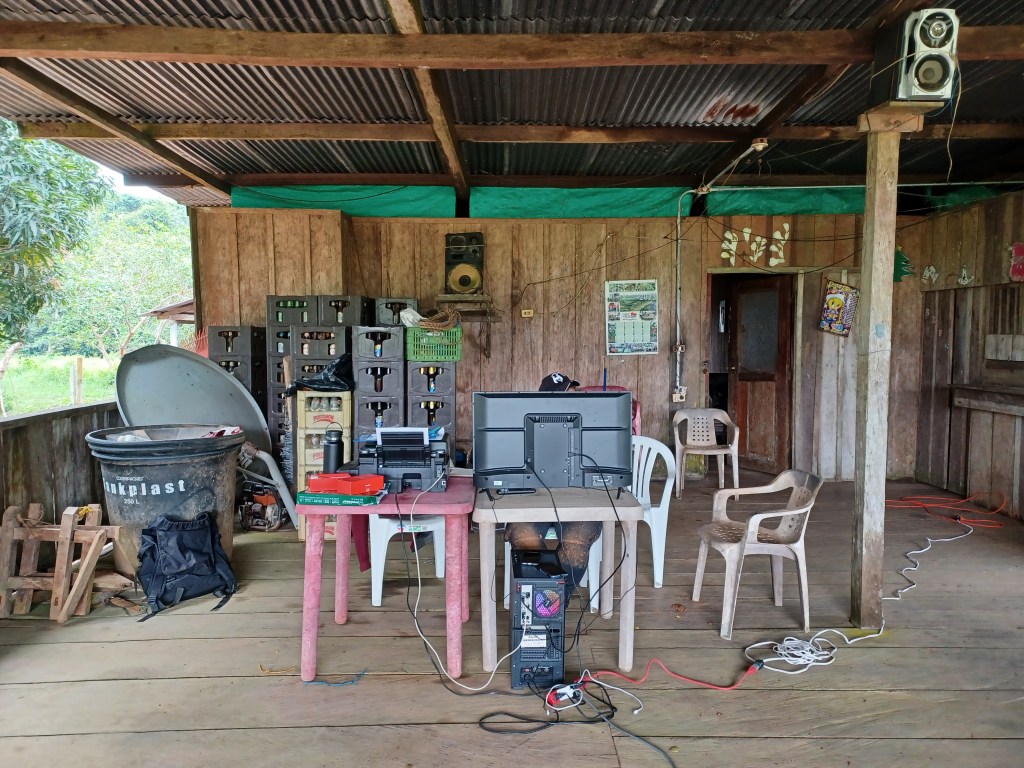
Juliana Montesano
Juliana Montesano’s research examines the everyday implementation of social policies at the local level, focusing on the Universal Child Allowance, one of Argentina’s most enduring social inclusion programs. In a context marked by territorial fragmentation, it sheds light on the coexistence of contrasting modes of implementation, combining hands-on practices with standardized approaches, primarily carried out by subaltern agents, in close collaboration with less institutionalized actors and the beneficiaries themselves.
Diego Valdiviesio
Diego Valdivieso’s current research examines state–citizen interactions in rural Chile through ethnographic study of public policy implementation. Focusing on how frontline officials and users engage with rural development programs, it highlights the situated practices, negotiations, and meanings that shape public action in peripheral territories. This approach foregrounds everyday experiences of the state and the relational dynamics that mediate access to rights and public resources.
Tatjana Thelen
Tatjana Thelen is Professor of Social and Cultural Anthropology at the University of Vienna. Her research and publications focus on issues of property, inequality, care, and the state in Hungary, Romania, Serbia, and eastern Germany and contributed to the development of stategraphy, a relational approach to the state. She is currently working on a book about the role of “political atmospheres” in generating critiques that are not only impacted by but profoundly shape institutions, the state, and political transformations.
Hannes Käckmeister
Hannes Käckmeister’s research explores how young people, particularly from marginalized backgrounds, interact with institutional structures. Bridging youth sociology and forced migration, his work addresses topics such as unaccompanied minors, age assessment, and institutional labeling in cross-border contexts, alongside youth engagement with digital technologies in formal and non-formal educational settings in Luxembourg.
 LoCI - Lower classes and institutions